Tuesday, May 21, 2013
Vandaceous mystery orchid
We were told this vanda is orange. We assume it is an ascocentrum because it is small. It came to us in a 6" wooden basket with the roots wrapped around in the basket and a few roots attached to the basket. When we first got it we sprayed it every day, but the leaves just started to shrivel and look really sad. It also got a pretty bad sunburn when it had to go to a babysitter for a short trip we made. We started spraying it twice a day to see if the shrivelling was just a moisture problem. The leaves plumped back up. We decided to put a few bigger chunks of bark, a couple cut up wine corks, and a tiny bit of moss in the basket with the roots to keep the humidity up. The medium still dries out in a couple of hours so it hasn't caused any rot problems. Now we only have to spray it once a day and the leaves haven't been shrivelling. It has put on a couple of new leaves since we got it which is always exciting. I have been spraying it daily with the Dyna Gro- Grow fertilizer that we use on all our plants when we water. Vandas are supposed to be heavy feeders, the concentration of this fertilizer type is only 7-9-5, and because they are not in medium they need more heavy feeding anyways. We are just hoping for more growth and hopefully flowers soon!

BLC "Steve Stevenson Ponkan" x BLC Goldenzelle "Lemon Chiffon"
We often refer to this one as lemon chiffon. It came from someone at Steven's work. It was potted in a plastic pot with pebbles, but the pot was looking ratty and it kept tipping over, so we repotted it shortly after getting it. We potted it into a 6" wooden basket with standard bark mix. It made a couple of nice new growths last year and lots of new roots (of course many of which are outside the basket). We've realized that the cattleyas seem to like putting a lot of roots outside the basket, which doesn't seem to both them any, but it bothers us because we worry the roots will dehydrate and die and it also makes repotting a giant pain. It has been doing well in it's new home though. It also got scale cooties when we had the outbreak and sulked a little bit. We haven't ever seen it flower; it might not be big enough yet it only has 4 pseudobulbs with leaves and 2 old backbulbs. It really didn't grow at all during the winter, but it is back in the saddle again this spring. So far so good. I also mist its outside the basket roots with fertilizer water on lots of days when I spray my vandas. I water it when the medium dries out all the way and fertilize weekly.
BLC "Sweet Treat" (BLC "Pokai Tangerine" x Cattleya "Chocolate Drop")
We got this orchid that we normally call tangerine from someone at Steven's work. It was growing in a 4" wooden basket with just a tiny bit of medium in there and pretty much all of it's roots were outside the basket. We eventually decided to repot it into something that would fit its roots. We soaked the whole plant, basket and all, for a while, maybe even overnight, to loosen the roots. We scraped off all the roots and pulled it out of the basket (It was pretty thoroughly manhandled). We planted it then in a 6" wooden basket with standard bark mix. It seemed to respond just fine to the repotting, making roots and all. It of course started making all of its new roots outside the basket!! It must just have a thing for that, which doesn't seem to bother the plant any, but we find annoying. We water it only when it dries out and fertilize it weekly. It hasn't really been growing the way our other plants have though, and we aren't really sure why. We thought it might be because most of the roots are outside the medium so they are getting less fertilizer. I started spraying the roots outside the basket with fertilizer water most days when I spray my vandas. It has a small new growth nub, but it is moving at the pace of a turtle- way slower than all the other plants it seems like. I guess we will just keep going with the fertilizer spray and see what happens. I really want it to grow and flower so we can see what it looks like!


Cattleya with yellow flower and maroon throat
We also got this yellow cattleya from someone at Steven's work. It was growing in a 6" wooden basket in bark mix when we got it. We treated it just like any cattleya in higher light and letting it dry out between waterings. It actually flowered for us last summer which was a fun surprise- now we know what it looks like! It also got scale pretty badly when we had the outbreak, and is one of the plants that sulked for a while. It also made several new growths in August that all ended up being floppy and limp looking. I read that this can happen from it being too hot, but we aren't really sure what was wrong with it. We repotted it into an 8" wooden basket with standard bark mix, and it seemed to sulk. I think it was just a bad time to repot at the end of the growing season. It also got too much sun over the winter and some of the older leaves turned yellow, so we cut them off. I think we also way over potted the poor thing because it's the type of cattleya with the skinnier roots rather than the giant fat roots. The mix is pretty large chunks though so it seems to be drying out ok. I don't think we will repot it again until it outgrows this new basket because I am worried it will just sulk again and it seems to be doing ok now. This spring it started making a few new growths which we are really excited about since it seemed like it wasn't doing that well. I think it was just a combination of getting bugs and getting repotted at the wrong time of year. I feel good that it will return to its former glory!

Dendrobium aggregatum
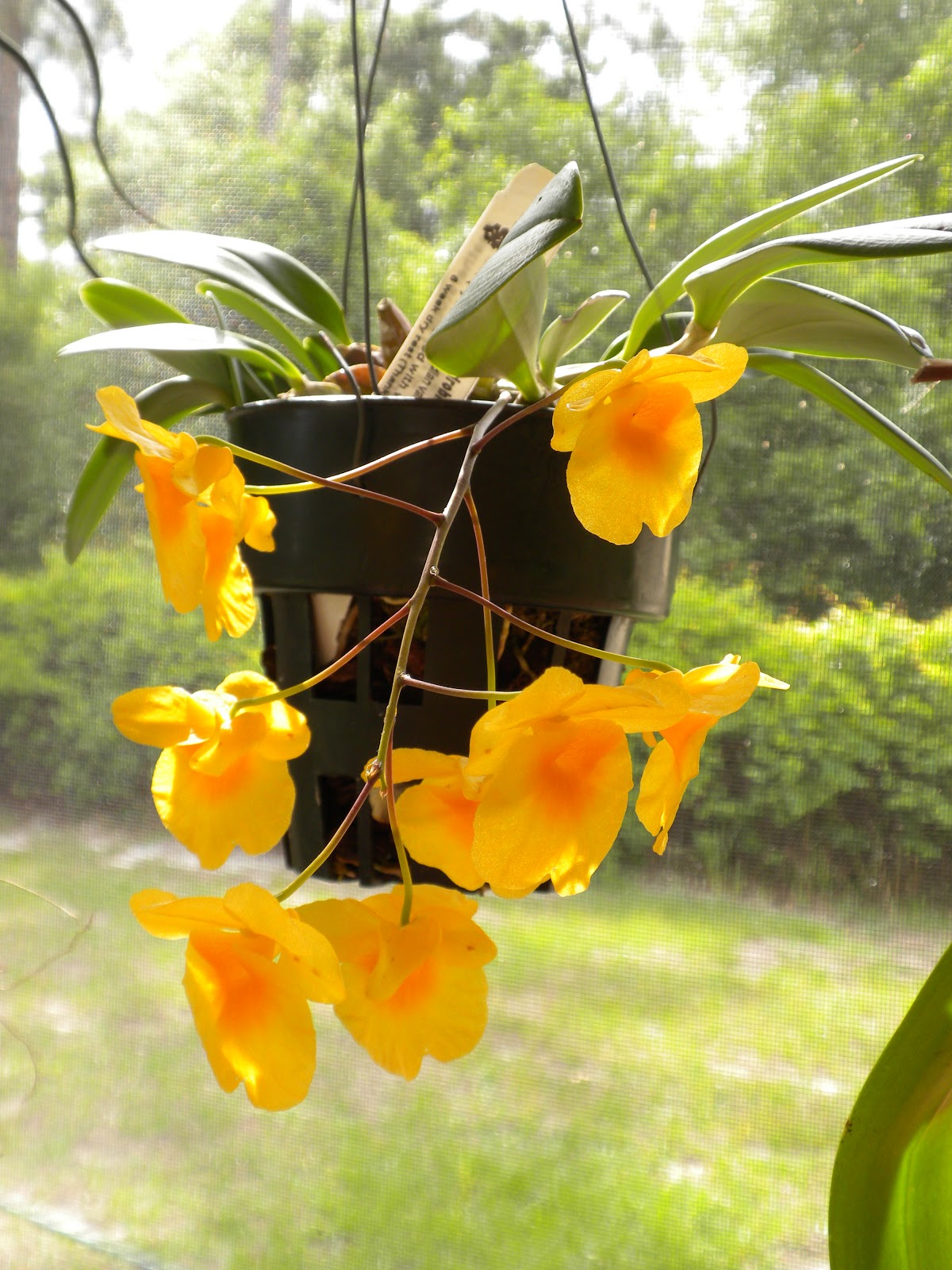
We bought the Dendrobium aggregatum at the Redland Orchid Festival last year. It was and still is potted in a 4" plastic basket with a wad of moss right under the plant and the rest of the basket is bark. We were told it wants high light, similar to a cattleya at least. The lady also said it wants tons of water and tons of fertilizer in the growing season then don't water it AT ALL from at least Thanksgiving until New Years. Wait until it starts showing signs of new growth/flowering spike then you can start watering and fertilizing like crazy again. We followed the instructions watering and fertilizing like crazy over the summer. At Thanksgiving we quit watering it all together and probably didn't water it at all for at least 2 months. It started to look really shrivelled and dry, so we looked it up and found that it's ok to water a tiny bit occassionally during the rest just to keep the pseudobulbs from totally shrivelling. We would do a very brief maybe 5 second splashing with the sink sprayer occassionally, maybe every 2 weeks as it got further and further along into the rest period. When February rolled around we started wondering when it would start doing something. We saw flowering aggregatums at shows in February and asked one of the vendors if there was a point at which we should just start watering it to force it to come out of rest. She said if it's not doing anything by March you can start watering it. It started putting on a flowering spike shortly after that, so there was no need to force it. We just went back to the tons of water and fertilizer, and it has been putting on new growths rapidly. We are really glad we were able to do this right because it was our first try at an orchid that needs a rest. It was also the plant's first year of flowering so it only had one spike, but it was really beautiful. It seems to do well with its potting setup, but I suspect it will outgrow its basket by the end of this growing season and will be ready for a repot. I think we will probably use the same method, since it seems to be working really well. These orchids that need to rest are actually really easy, because for a few months out of the year you don't have to do anything with them!
Encyclia "Cindy"
Encyclia Cindy we got from someone at Steven's work in a 4" clay orchid po,t potted in bark with moss over the top to keep a bit more humidity. We were amazed when it started putting on a flowering spike and flowered for us right away! It seemed so small (just a few pseudobulbs) to flower, but I guess not! It also got cooties in the wave of scale outbreak that we had. Many of the plants that got scale sulked for a while. One of the pseudobulbs had the whole leaf part break off. We ended up repotting it back into it's same pot with just bark mix a few months after we got it. It came back slowly but surely putting on a lot of new roots and a new pseudobulb which is now putting on a flowering spike! Maybe it only flowers in May? We aren't sure yet about that. We had to water it a bit more often than the other orchids because it was drying out a lot faster. I put a bit of moss at the top where there were new roots coming out to keep them moist, and I would mist it every other day or so if it was hot and dry. We have found that it's ok to put moss on top of bark to keep new roots happy until they can get further into the medium, but it is NOT ok to put bark on top of moss. "Bark over moss, major root loss" is the mnemonic device we made up. It makes the bark rot really fast and then the roots get sad.


Encyclia tampensis
Another Florida native! We received a small one in a 4" basket planted in moss from someone at Steven's work. It just did not do very well from the start. It got an outbreak of scale which got on our other plants because we had been dunking all of our plants in the same bucket of water to water them. THIS IS A BAD IDEA! They will get cooties! We didn't realize until we had an outbreak. We also lost a couple of pseudobulbs to some kind of rot as well as the scale problem. The poor plant only ended up with a couple of pseudobulbs in a rehab chamber for months. The rehab chamber was a tiny 2" plastic pot with extra slits cut in it for ventilation growing in moss. The plant eventually made a few roots this spring. We also bought a new small Encyclia tampensis a couple days ago at the Redland Orchid Festival that we potted into a 4" clay orchid pot potted in bark alongside the rehab pieces. We are going to water it when it dries out and fertilize with every watering while in active growth. See the post on Cooties for more about dealing with bugs.
Subscribe to:
Posts (Atom)